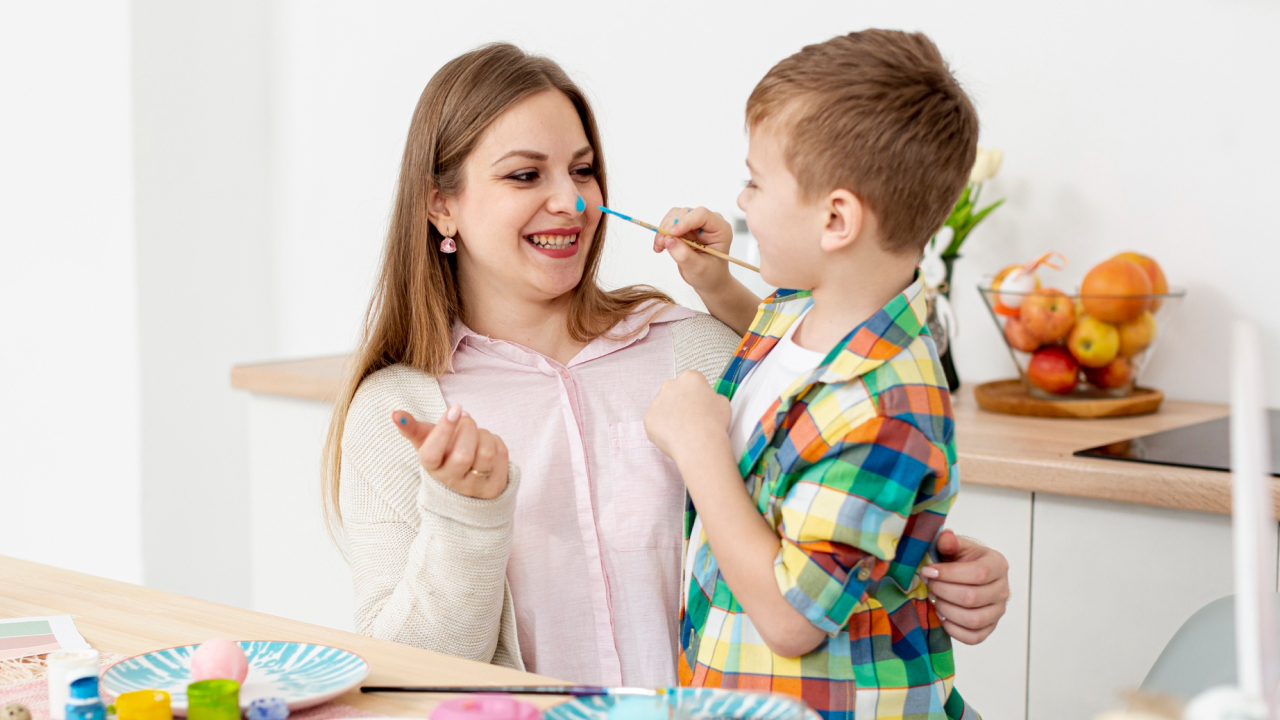
Introduction: Transforming Everyday into Extraordinary: Making Learning Fun at Home
As parents, we all want to foster a love for learning in our children. Often, we envision this happening in classrooms, with dedicated lessons and structured activities. However, the truth is that some of the most profound and enjoyable learning experiences can happen right at home, embedded within the fabric of daily life. You don't need a formal curriculum, specialized teaching degrees, or a stash of expensive educational toys to ignite your child's curiosity and build foundational skills.
The key lies in shifting our perspective: recognizing that every moment holds learning potential and embracing a playful, pressure-free approach. This article will share five practical, easy-to-implement tips designed to transform everyday routines, observations, and interactions into exciting educational adventures. Discover how to create an engaging learning environment that encourages exploration, critical thinking, and a lifelong passion for discovery, all within the comfort and familiarity of your own home.
Tip 1: Unleash the Power of the Everyday: Learning with What You Have
One of the most liberating aspects of home learning is realizing that you don't need a specialist store to acquire educational tools. Your home is already a treasure trove of learning opportunities! By simply reframing how you view common household items, you can transform ordinary moments into extraordinary learning experiences.
Household Objects as Learning Tools
Think about the items you use every day. They are tactile, familiar, and inherently interesting to children.
- Kitchen: Utensils, fruits, vegetables, measuring cups, food packaging.
- Laundry Room: Socks, clothes, detergent bottles.
- Living Room: Books, cushions, remote controls, toys.
- Bathroom: Sponges, towels, bottles.
- Garden/Outdoor: Leaves, stones, flowers, sticks.
Practical Examples: Counting, Sorting, Patterns, Shapes, Colors
Here's how to turn everyday items into engaging lessons:
- Counting: Count spoons while setting the table, count steps as you walk upstairs, count blocks as you stack them, or count pieces of fruit in a bowl.
- Sorting: Sort laundry by color or type (e.g., shirts, socks), sort toys by size or category (e.g., cars, animals), or sort kitchen utensils.
- Patterns: Arrange toys in a simple pattern (e.g., car, block, car, block) and ask your child to continue it. Identify patterns on clothing or wallpaper.
- Shapes: Point out the square shape of a window, the roundness of a plate, or the rectangular cereal box in the pantry.
- Colors: Ask your child to find "something red" in the room, name the colors of their clothes, or sort crayons by color.
Benefits: Cost-Effective, Relevant, Practical Skills
This approach offers numerous advantages:
- Cost-Effective: No need to buy expensive learning materials.
- Relevant: Learning is directly connected to their immediate environment, making it more meaningful.
- Builds Practical Skills: Children learn about the world around them while developing foundational academic skills.
- Fosters Observation: Encourages children to look closely at their surroundings.
- Boosts Creativity: Challenges both parent and child to think inventively about learning.
Tip 2: Fueling Intrinsic Motivation: Harnessing Your Child's Natural Curiosity
Children are born scientists, driven by an insatiable desire to understand the world around them. Their endless questions and spontaneous interests are not distractions; they are golden opportunities for truly effective and joyful learning. The most profound learning happens when it's self-directed and sparked by genuine curiosity.
The "Why" Behind the "Why?": The Power of Inquiry
When your child asks "Why is the sky blue?" or "How does a worm move?", they are expressing a fundamental human drive to learn. These questions are an invitation to explore. Instead of providing a quick, definitive answer, see it as a chance to embark on a mini-investigation together.
- Acknowledge and Validate: "That's a great question! I wonder about that too."
- Explore Together: "Let's see if we can find out." This might involve looking in a book, searching a trusted kid-friendly website (with supervision), or conducting a simple experiment.
- Encourage More Questions: "What else do you notice about...?"
Facilitating Exploration and Discovery
Child-led learning doesn't mean you do nothing; it means you provide the environment and resources for discovery.
- Provide Open-Ended Materials: Offer blocks, art supplies, natural items, or household "junk" (boxes, tubes) that can be used in many ways.
- Observe and Extend: Watch what captivates your child. If they are fascinated by bugs, provide magnifying glasses, books about insects, or simply talk about different types of bugs you see outdoors.
- Create Opportunities: Visit a local library, park, museum, or even a construction site to spark new interests.
Connecting Interests to Learning
Whatever your child is passionate about, you can almost certainly weave academic skills into it.
- If they love dinosaurs: Read books about dinosaurs (literacy), count dinosaur toys (math), draw different types of dinosaurs (art/fine motor).
- If they love cooking: Measure ingredients (math), read recipes (literacy), learn about different foods (science/nutrition).
- If they love building: Talk about shapes, sizes, stability (geometry/physics), count blocks.
Benefits: Deeper Engagement, Better Retention, Love for Inquiry
When learning follows their questions and passions, the benefits are profound:
- Deeper Engagement: Children are more invested when the topic is personally relevant.
- Better Retention: Information learned through active inquiry is more likely to be remembered.
- Develops Critical Thinking: They learn how to ask questions, seek answers, and make connections.
- Fosters a Love for Inquiry: They learn that learning is exciting and within their control.
Tip 3: The Art of the Short Burst: Keeping Learning Engaging and Effective
In our enthusiasm to foster a child's learning, it's easy to fall into the trap of thinking longer sessions equal more learning. However, for young children, the opposite is often true. Understanding and respecting their developmental attention spans is crucial for effective and enjoyable home learning.
Understanding Attention Spans in Young Children
A general rule of thumb for attention span in young children is roughly 2-5 minutes per year of age. So, a 3-year-old might focus intently for 6-15 minutes, while a 5-year-old could manage 10-25 minutes. These are averages, and individual children will vary, especially based on their interest in the activity. Pushing past these natural limits often leads to frustration, disengagement, and a negative association with learning.
Implementing Micro-Learning Sessions
Instead of one long "learning time," think about incorporating several "micro-learning sessions" throughout the day. These are brief, focused, and often spontaneous moments that last anywhere from 5 to 15 minutes.
- Integrate Small Moments: Count the steps on your way to the mailbox, identify letters on a sign while waiting for a bus, or do a quick puzzle before dinner.
- Be Flexible: If your child is deeply engaged in imaginative play, don't interrupt for a formal learning activity. Instead, observe and see if you can weave in learning naturally.
- Follow Their Lead: If they show interest in a specific book or game, seize that moment for a short, focused interaction.
Benefits: Prevents Burnout, Maintains Interest, Consistent Exposure
This "short and sweet" approach offers significant advantages:
- Prevents Burnout: Children don't feel overwhelmed or exhausted by learning.
- Maintains Interest: They remain curious and eager for the next learning moment.
- Consistent Exposure: Frequent, brief exposures to concepts are often more effective for long-term retention than infrequent, lengthy ones.
- Builds Positive Associations: Learning remains fun and something to look forward to.
Tip 4: Playful Productivity: Turning Chores and Routines into Adventures
Chores and daily routines are often seen as necessary evils, but with a slight shift in perspective, they can become rich opportunities for learning and skill development. By injecting an element of play, you can transform resistance into enthusiasm, and mundane tasks into engaging adventures.
Gamification Techniques for Everyday Tasks
Gamification involves applying game-design elements and game principles in non-game contexts. For chores, this might look like:
- Timing Challenges: "Can you put all your blocks in the bin before the timer rings?" (Use a fun kitchen timer).
- Scavenger Hunts: "Find all the green clothes and put them in the laundry basket."
- Role-Playing: "You're the head chef, and we need to sort these vegetables for dinner!" or "You're a clean-up crew superhero!"
- Point Systems/Charts: For older toddlers, a simple sticker chart for completed tasks can provide visual motivation.
- Mystery Tasks: Write chores on slips of paper, put them in a hat, and let your child pick one to "reveal" their mission.
Skill Development Through Chores: Math, Sequencing, Responsibility
Chores are not just about tidiness; they are powerful teachers of executive function and academic skills:
- Math: Counting items, sorting by size/color/shape, matching pairs (socks), identifying patterns, understanding "more" and "less."
- Sequencing: Following multi-step instructions (e.g., clear plate, wash hands, sit down), understanding the order of tasks (e.g., wash, dry, fold).
- Language: Learning new vocabulary related to household items and actions, practicing descriptive language ("Which is the heaviest toy?").
- Fine and Gross Motor Skills: Gripping sponges, carrying laundry baskets, wiping surfaces, stacking dishes.
- Responsibility and Independence: Understanding their contribution to the family unit and gaining confidence in their abilities.
Practical Examples: Tidying Up, Cooking, Gardening
Here's how to apply these ideas:
- Tidying Up: "Can you find all the red toys?" (color recognition). "Let's see how many books we can put away before the timer dings" (counting, time awareness).
- Cooking/Meal Prep: "Can you count five carrots for our soup?" (counting). "Which is bigger, this potato or that onion?" (size comparison). "Help me sort the spoons from the forks" (sorting, categorization).
- Gardening: "Let's find three smooth stones" (counting, texture). "Which plants need water?" (observation, responsibility).
Benefits: Builds Life Skills, Fosters Cooperation, Reduces Resistance
Framing tidying or simple tasks as challenges or races brings immense benefits:
- Builds Essential Life Skills: Children learn to contribute and become more independent.
- Fosters Cooperation: Turns potential conflict into shared goals.
- Reduces Resistance: Transforms "I don't want to" into "Let's play a game!"
- Boosts Confidence: Successfully completing tasks builds self-efficacy.
Tip 5: Cultivating a Growth Mindset: Celebrating Effort and Resilience
One of the most powerful gifts you can give your child is a belief in their own ability to learn and grow, regardless of immediate success. This is the essence of a "growth mindset"—the understanding that intelligence and abilities can be developed through dedication and hard work. When you celebrate effort over innate talent or perfect results, you foster resilience, curiosity, and a willingness to tackle new challenges.
Process Over Product: Why Effort Matters More Than Perfection
It’s natural to praise a child when they succeed. However, focusing solely on the "right answer" or a perfect outcome can inadvertently teach children that only perfect results are valuable. Instead, shift your praise to the process: the effort they put in, the strategies they tried, and their perseverance.
- Instead of: "You're so smart for getting that right!"
- Try: "I love how you kept trying different ways to solve that puzzle!" or "You worked really hard on that drawing, and your colors are so vibrant!"
Encouraging Perseverance Through Challenges
Learning often involves facing difficulties. When a child struggles, it's our opportunity to teach them the value of perseverance.
- Normalize Struggle: "That looks tricky. Sometimes things are hard, and that's how we learn."
- Offer Support, Not Solutions: Instead of doing it for them, ask, "What have you tried so far?" or "What's another way you could think about this?"
- Share Your Own Struggles: "Remember when I was learning to bake that cake, and it didn't turn out the first time? I had to try again."
The Language of Praise: Specific and Meaningful Feedback
Effective praise is specific and focused on observable actions and efforts.
- "You carefully matched all those shapes!" (Focus on carefulness).
- "I noticed you kept practicing your letter 'A' even when it was hard." (Focus on persistence).
- "Your drawing shows so much imagination!" (Focus on creativity).
Benefits: Builds Self-Esteem, Promotes Risk-Taking, Fosters Love for Learning
This mindset helps children feel safe to explore and make mistakes, which is when the best learning happens. The advantages include:
- Builds Authentic Self-Esteem: Based on effort and resilience, not just achievements.
- Promotes Risk-Taking: Children are more willing to try new things and embrace challenges.
- Fosters a Lifelong Love for Learning: They understand that their abilities can grow, making learning an exciting process rather than a daunting one.
- Develops Problem-Solving Skills: They learn to approach difficulties with a positive, strategic outlook.
Bonus Tip: Create a Dedicated (but Flexible) Learning Nook
While learning can happen anywhere in the home, having a designated space, however small or informal, can significantly enhance a child's focus and signal that it's time for quiet activities or exploration. This doesn't mean you need a separate classroom; it could be a corner of the living room, a small table in the kitchen, or even a cozy spot in their bedroom.
The Importance of a Conducive Learning Environment
A dedicated learning nook helps children mentally transition into learning mode. It provides a sense of structure and routine without being rigid. It also communicates that learning is valued and has its own special place in the home. Such an environment can reduce distractions and make resources easily accessible.
Elements of an Inspiring Learning Nook
Consider including a few key elements to make the space inviting and functional:
- Books: A small collection of age-appropriate books, both fiction and non-fiction, easily within reach.
- Art Supplies: Crayons, markers, paper, playdough, child-safe scissors, and glue.
- Puzzles and Games: Educational puzzles, board games, or simple construction toys.
- Comfort: A cozy cushion, a small rug, or good lighting can make the space more appealing.
- Natural Elements: A small plant, a jar of interesting rocks, or shells can connect the indoor space to the natural world.
Flexibility and Adaptability of the Space
The "flexible" aspect is key. This nook doesn't need to be pristine or static. It should evolve with your child's interests and developmental stage. It can be moved if needed, and its contents can be rotated to keep things fresh. The most important thing is that it's a space where your child feels comfortable, capable, and excited to explore.
Conclusion: The Joyful Path to Lifelong Learning Starts at Home
The journey of learning is a marathon, not a sprint, and the most effective learning often happens in the most unexpected and joyful ways. By embracing these practical tips—leveraging everyday objects, following your child's innate curiosity, engaging in short bursts of activity, turning chores into games, and celebrating every effort—you are doing more than just teaching discrete facts. You are cultivating a profound love for learning, building resilience, and fostering a confident, inquisitive spirit.
Remember, you are your child's first and most influential teacher. The warm, supportive, and playful environment you create at home is the most powerful educational tool available. At Koala Learners, we are here to support you in this incredible journey, providing resources and insights to help you nurture a child who is not only knowledgeable but also genuinely loves to explore, discover, and learn throughout their entire life. Embrace the fun, celebrate the small victories, and watch your child flourish.